Buying decision
Mini Fridge vs. Mini Freezer: Which One Do You Actually Need?
By MiniFridge.com · Independently researched · Updated July 2026
Most single-door mini fridges include a small freezer compartment, but it is not a true freezer: it shares the fridge's cooling, is best for ice and very short-term storage, and usually needs manual defrosting. If you need to keep food genuinely frozen, you want either a compact fridge with a separate true-freezer section or a dedicated mini freezer. If you never freeze anything, an all-refrigerator (no freezer box) gives you more usable cold space.
We may earn a commission when you buy through our links, at no extra cost to you. Learn more
Does a mini fridge freezer compartment actually freeze food?
Here is the thing nobody tells you at the store: the little freezer box inside most single-door mini fridges is not a real freezer. It sits inside the main cabinet and shares the same cooling loop, so it runs warmer than a standalone freezer and it frosts up, requiring manual defrosting. Manufacturers are often candid about this in the fine print — the compartment is sized and rated for an ice-cube tray and short-term storage, not for keeping a week of frozen dinners solid.
The Commercial Cool CCR26B is a clear example: a single-door 2.6 cu. ft. fridge whose spec sheet lists a “half-width freezer compartment with ice cube tray” and manual defrost. That is typical, not a flaw — it is simply what a compartment is. If your plan is ice for drinks and maybe a couple of frozen items for a day or two, it is fine (our mini fridges with a freezer roundup compares the current options). If your plan is real frozen storage, keep reading.
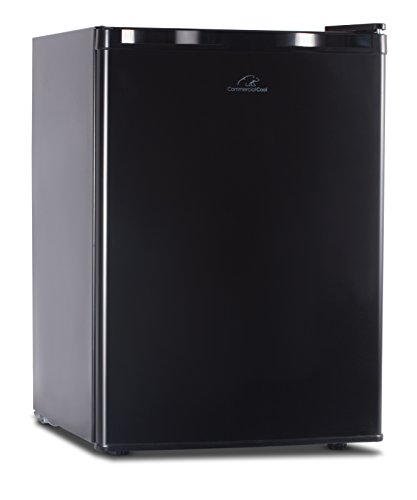
compact · 2.6 cu ft
2 Full-width Slide-out Glass Shelves

compact · 2.6 cu ft
2.6 cu. ft. (73 L) capacity compact all refrigerator
Mini fridge vs. mini freezer: your three real options
1. All-refrigerator (freezerless) models
If you never freeze anything, the freezer box is wasted space that also frosts up and eats energy. An all-refrigerator deletes it. The Danby Designer DAR026A1BDD is a good template: 2.6 cubic feet of pure fridge, automatic defrost (uncommon at this size), and Energy Star compliance. For an office, a nursery bottle station, or a bar that only chills drinks, an all-refrigerator is often the smarter buy — we keep a running list of freezerless refrigerators worth considering.
2. Mini fridges with a true freezer section
A minority of compact models include a genuinely separate freezer — its own insulated section, sometimes its own door, and a stated freezer capacity on the spec sheet. The GE GDE03GGKBB is a two-door design whose listing calls it what it is — “a true freezer” — at 0.93 cubic feet, and the larger retro-styled Hamilton Beach 7.5 cu. ft. two-door states a separate 1.5 cu. ft. freezer capacity outright. When a listing gives you a separate freezer cubic-foot number, that is your signal it is a real freezer section, not just a chiller shelf. Our 2-door mini fridges with a freezer page collects the models that pass this test.

compact · 3.1 cu ft
CONVENIENT DESIGN: Interior fridge door features storage for tall bottles and a built-in can rack, freeing up shelf space and ensuring your favorite beverages are always in reach

compact · 7.5 cu ft
LARGE CAPACITY: This mini fridge has 7.5 Cu Ft of storage capacity to let you keep all of your favourite food and beverages cool. Combines easy-to-use features with a retro and practical design to complement any kitchen. Freezer Capacity (cu. ft.): 1.5.Lock Type:Electronic
3. A dedicated mini freezer
If frozen food is the whole reason you are shopping — batch-cooked meals, frozen vegetables, ice cream that stays firm — the right tool is a dedicated mini or compact freezer, an appliance engineered to hold its entire interior below freezing (0°F is the standard target for long-term frozen storage). No mini fridge compartment competes with that. Buy the appliance built for the job rather than hoping a compartment stretches to fill it.
These come in two shapes. An upright freezer like the Midea WHS-109FW1 gives you 3.0 cubic feet behind a door, with an external thermostat that adjusts from 10.4°F down to −11.2°F — comfortably past the 0°F mark. A chest freezer like the BLACK+DECKER BCFK276 packs 2.7 cubic feet (rated to hold up to 94.5 lbs of frozen food) under a top lid. If it is headed for an unheated space, filter for garage-ready freezers, which are rated for temperature swings.

upright-freezer · 3 cu ft
[Large Capacity] With a capacity of 3.0 cubic feet, Midea WHS-109FW1 upright freezer provides ample space for all your frozen food storage, which can meet most of the needs. Product dimension 21.3"D x 19.7"W x 33.9"H

chest-freezer · 2.7 cu ft
Compact, Deep Freezer Storage: 2.7 cu. ft. capacity holds a substantial 94.5 lbs. of frozen foods including cold meat, frozen dinners and ice cream. Keeps perishables frozen for your home or garage.
How to spot a true freezer on the spec sheet
You can usually tell which of the three you are looking at in about ten seconds:
- “All-refrigerator” or “larder” → no freezer. Often paired with automatic defrost.
- “Freezer compartment” or “freezer shelf,” no separate cu. ft. → chiller box. Expect manual defrost and ice-only performance.
- A separate freezer cubic-foot figure, or a second door → a true freezer section that actually holds frozen food.
- “Manual defrost” on the compartment is normal for minis; plan to empty and thaw it periodically.
Mini fridge or mini freezer: which should you buy?
Match the appliance to what you actually store. Drinks and snacks with occasional ice? Any mini fridge with a compartment is fine. Only ever chilling, never freezing? Save space and energy with an all-refrigerator. Need to keep food frozen for more than a day? Insist on a true freezer section — or, if freezing is the main event, buy a dedicated mini freezer. Once you have picked the type, use our sizing guide to get the capacity right, and our noise guide if it is going somewhere you sleep or work.
Frequently asked questions
Does a mini fridge freezer actually freeze food?
The small freezer "compartment" inside most single-door mini fridges shares the main cabinet's cooling and is really an ice-and-short-term-storage box. Manufacturers often describe it as good for an ice tray, not for keeping food frozen long term, and it usually needs manual defrosting. If you need to keep food properly frozen, look for a model with a separate, true freezer section — or a dedicated mini freezer.
What is the difference between a mini fridge and a mini freezer?
A mini fridge is a refrigerator that keeps food cold (roughly 33–46°F) and may include a small freezer compartment. A mini freezer is a dedicated appliance designed to hold its entire interior below freezing (0°F is the standard target for long-term frozen storage). If your priority is frozen food, a dedicated mini freezer does the job that a mini fridge's little compartment cannot.
Do all mini fridges have a freezer?
No. Some are "all-refrigerator" models with no freezer at all — like the Danby Designer DAR026A1BDD, which trades the freezer box for 2.6 cubic feet of pure fridge space and automatic defrost. Others have a small internal freezer shelf, and a few compact two-door models include a genuinely separate freezer with its own door. Read the spec sheet: "freezer compartment" and "true freezer" are not the same thing.
Can I keep ice cream in a mini fridge freezer?
In a small shared-cabinet freezer compartment, ice cream will usually stay soft or semi-frozen rather than firm, because that compartment is not held at a true freezer temperature. A model with a separate, insulated freezer section — such as a two-door compact with a true freezer — holds a colder, steadier temperature and does a much better job with ice cream and other frozen foods.
We may earn a commission when you buy through our links, at no extra cost to you. MiniFridge.com does not publish prices, star ratings, or review counts; specifications are drawn from manufacturer and retailer listings and cited as such.