Sizing guide
What Size Mini Fridge Do You Need? Cubic Feet, Explained
By MiniFridge.com · Independently researched · Updated July 2026
Mini fridge capacity is measured in cubic feet (cu. ft.), the total interior volume. Most single-door “mini” fridges run from about 1.6 to 3.5 cubic feet; compact and retro two-door models reach 4.6 cubic feet or more. As a rule of thumb, plan on roughly 1.5–1.7 cubic feet per person for drinks and light snacks, and size up if you store real groceries or want usable freezer space. Below we break down what each size actually holds and match it to your room.
We may earn a commission when you buy through our links, at no extra cost to you. Learn more
What does cubic feet mean on a mini fridge?
A cubic foot is a cube one foot on each side — about the volume of a standard basketball, or a little more than seven and a half gallons. When a manufacturer lists a mini fridge as “3.2 cu. ft.,” that is the total interior volume, including any freezer compartment and the door bins. It is not the same as the fridge's exterior footprint, and it does not tell you how the space is divided.
That last point is the one people miss. Two fridges rated at the same 3.2 cubic feet can feel completely different in daily use depending on how much of that volume is eaten by a freezer box, how the shelves are arranged, and whether the door bins fit tall bottles. So treat cubic feet as your first filter, then look at the shelf and door layout before you decide.
Mini fridge size chart: what fits at each size
Here is a realistic sense of what each common capacity band holds, based on the manufacturer specifications for the mini fridges we track:
The jump most people underestimate is from the sub-2 cubic foot desk fridge to the 3-plus cubic foot “real” mini fridge. At about 1.6 cubic feet, the MicroChill 1.7 Cu. Ft. Mini Fridge, Freon-free & Eco Friendly, Single Door Compact Fridge for Bedroom, Office, Dorm - 19.4" H x 18.6" W x 17.7" D (Black) sits on a countertop and holds a weekend of drinks — but Midea itself describes its freezer as a small half-width shelf best used for ice, and notes the 1.6 cu. ft. box “fills up fast” beyond drinks and snacks. Move up to 3.2 cubic feet and you roughly double the usable room. If you already know which end of the range you are shopping, we keep dedicated shortlists of small mini fridges and large mini fridges.
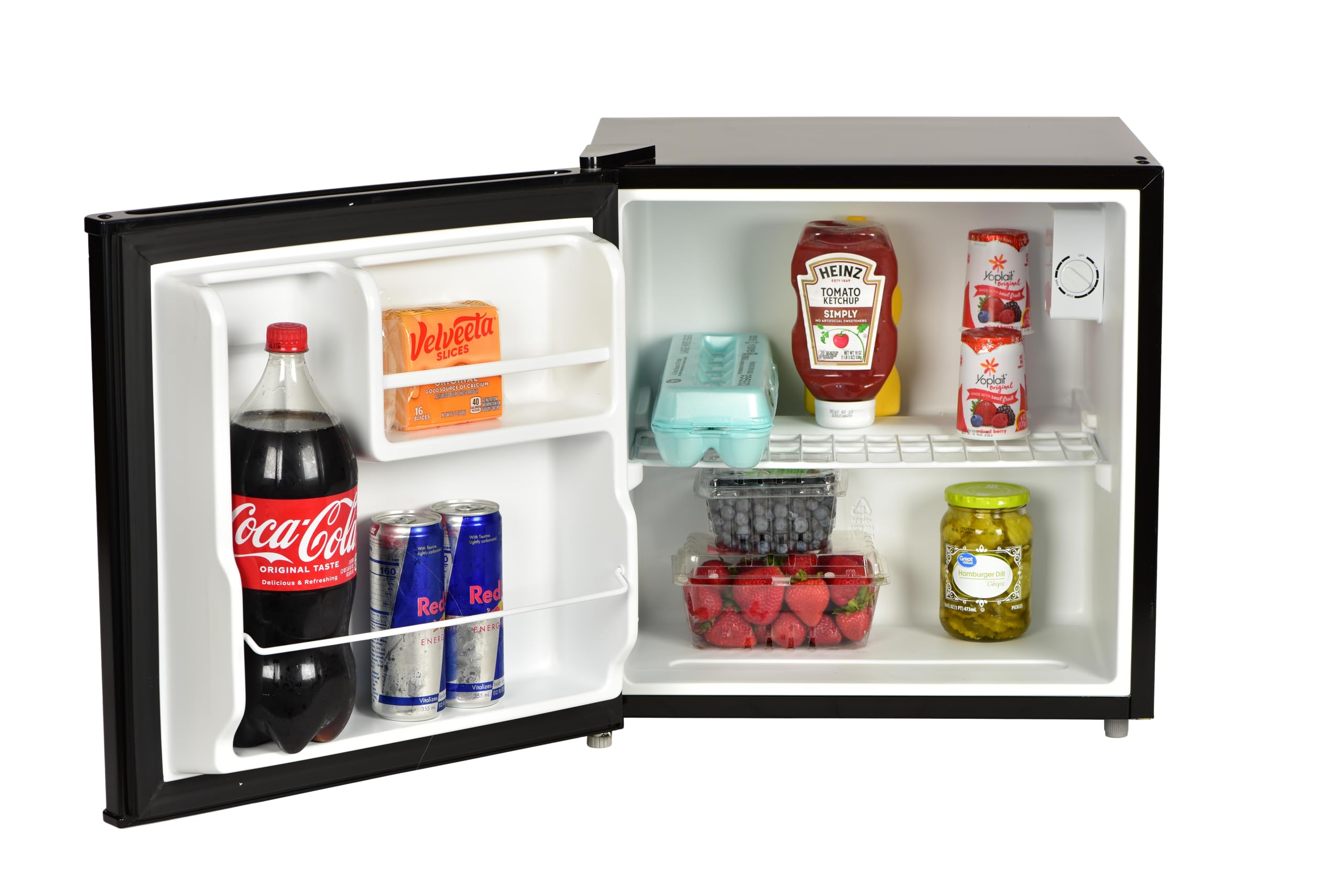
compact · 1.7 cu ft
Eco-Friendly: Built with R600A Natural Refrigerant instead of Freon to protect the O-zone.
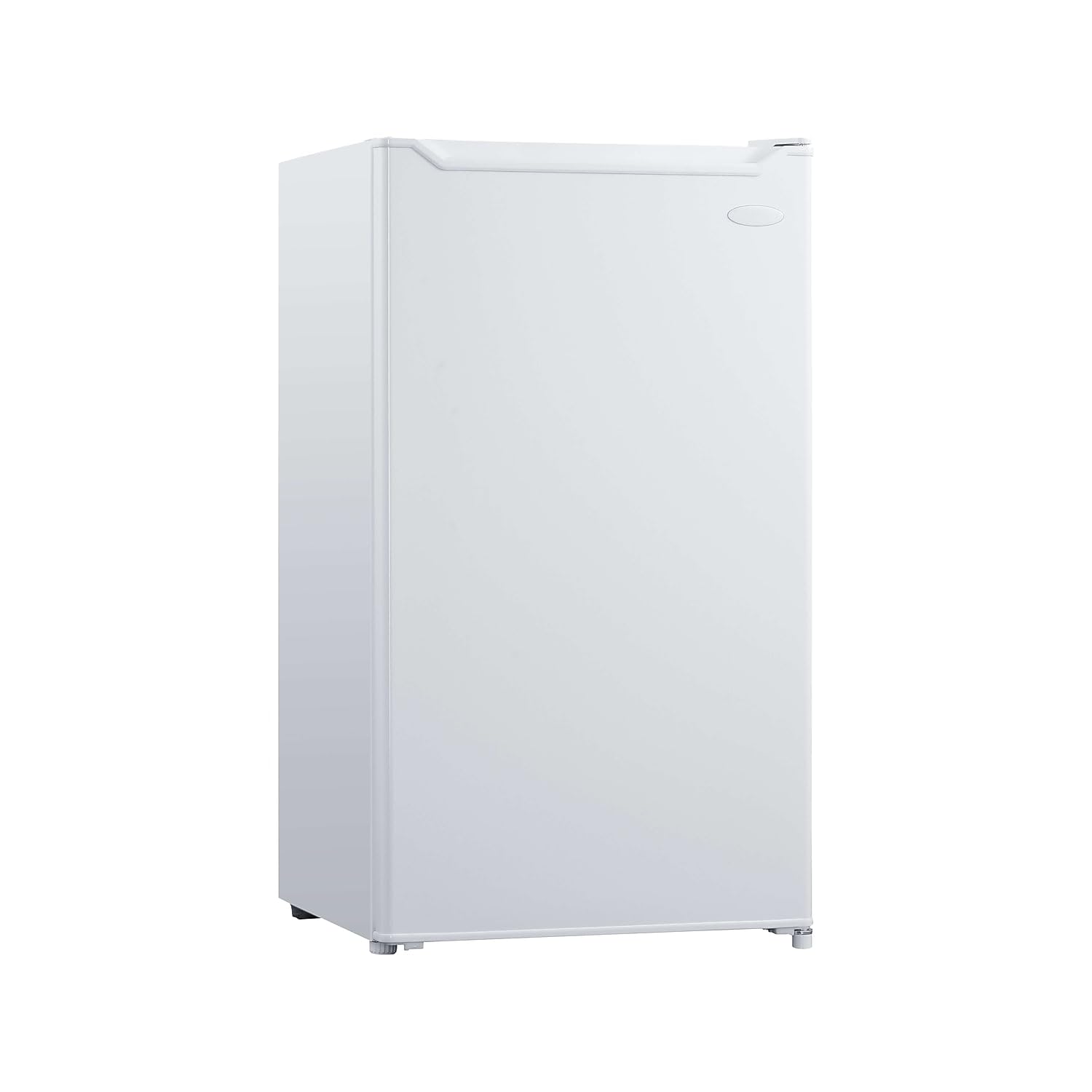
compact · 3.3 cu ft
Compact Mini Fridge: This Danby Diplomat mini fridge with chiller is the ideal mini fridge for apartments, basements, family rooms, dorms, offices, or the cottage
What size mini fridge for a dorm, office, or home bar?
Dorm rooms
For one student, 1.6–2.6 cubic feet covers drinks, snacks, and a few leftovers. For a shared room, step up to 3.1–3.5 cubic feet — the top of the single-door class. The Danby DAR044A6PDB 4.4 Cu.Ft. Mini Fridge, Compact Refrigerator For Bedroom, Living Room, Bar, Dorm, Kitchen, Office, E-Star In Pearl White With Lock sits right at that ceiling with a full-width freezer compartment and an in-door can dispenser, and our dorm mini fridge picks collect more options in this band. Always check your school's rules first: many cap capacity around 4.0–4.3 cubic feet and limit amperage — our dorm fridge rules checklist walks through the usual restrictions.
Offices and desks
A desk fridge lives or dies on footprint, not volume. A 1.6–2.5 cubic foot unit that sits on or under a desk is usually plenty for lunch and drinks — that band is exactly what our office mini fridge picks cover — and the smaller the compressor load, the quieter it tends to be next to you. If noise near your desk matters, read our mini fridge noise (dB) guide.
Nurseries and skincare
Bottle-warming stations and skincare fridges are usually measured in liters, not cubic feet, because they are thermoelectric coolers rather than compressor fridges. A 4-liter unit holds about six cans; a 10-liter unit about twelve. These trade capacity and true-cold performance for silence and a tiny footprint — a different tool than a compressor mini fridge. Browse our skincare fridge picks if that is your use case.
Home bars, garages, and beverage stations
This is where you leave the “mini” class behind. Once you want to chill bottles and cans for guests, plan on 4.6 cubic feet and up — the territory of bar fridges and beverage coolers. Glass-door beverage merchandisers like the Bluelinecool Back Bar Cooler with 3 Glass Doors, 11.5 Cu.Ft Commercial Bar Fridge, Under Counter Beverage Fridge with LED Lighting, ETL-Certified Beverage Cooler for Beer, Wine, and Soda — an 11.2 cubic foot built-in — give you front-loading, organized storage behind a locking glass door with adjustable shelves, which a single-door mini fridge simply cannot match. For garages, confirm the unit is rated garage-ready for wide ambient temperature swings; our garage refrigerator picks filter for exactly that.
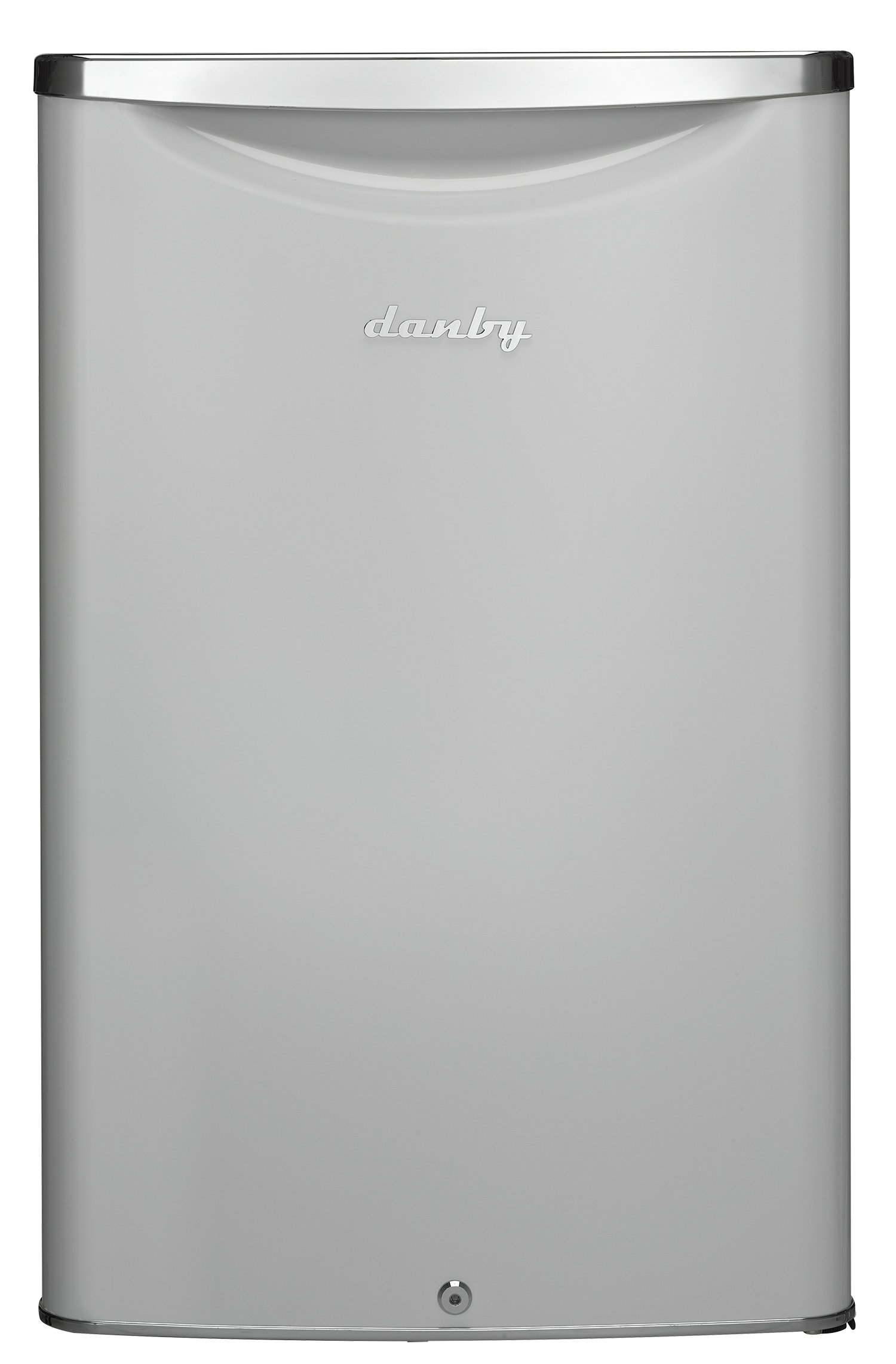
compact · 4.4 cu ft
Compact Mini Fridge: This Danby Contemporary Classic counter high mini fridge is the ideal mini fridge for additional refrigerator space in the kitchen, basement, family room, dorm or office
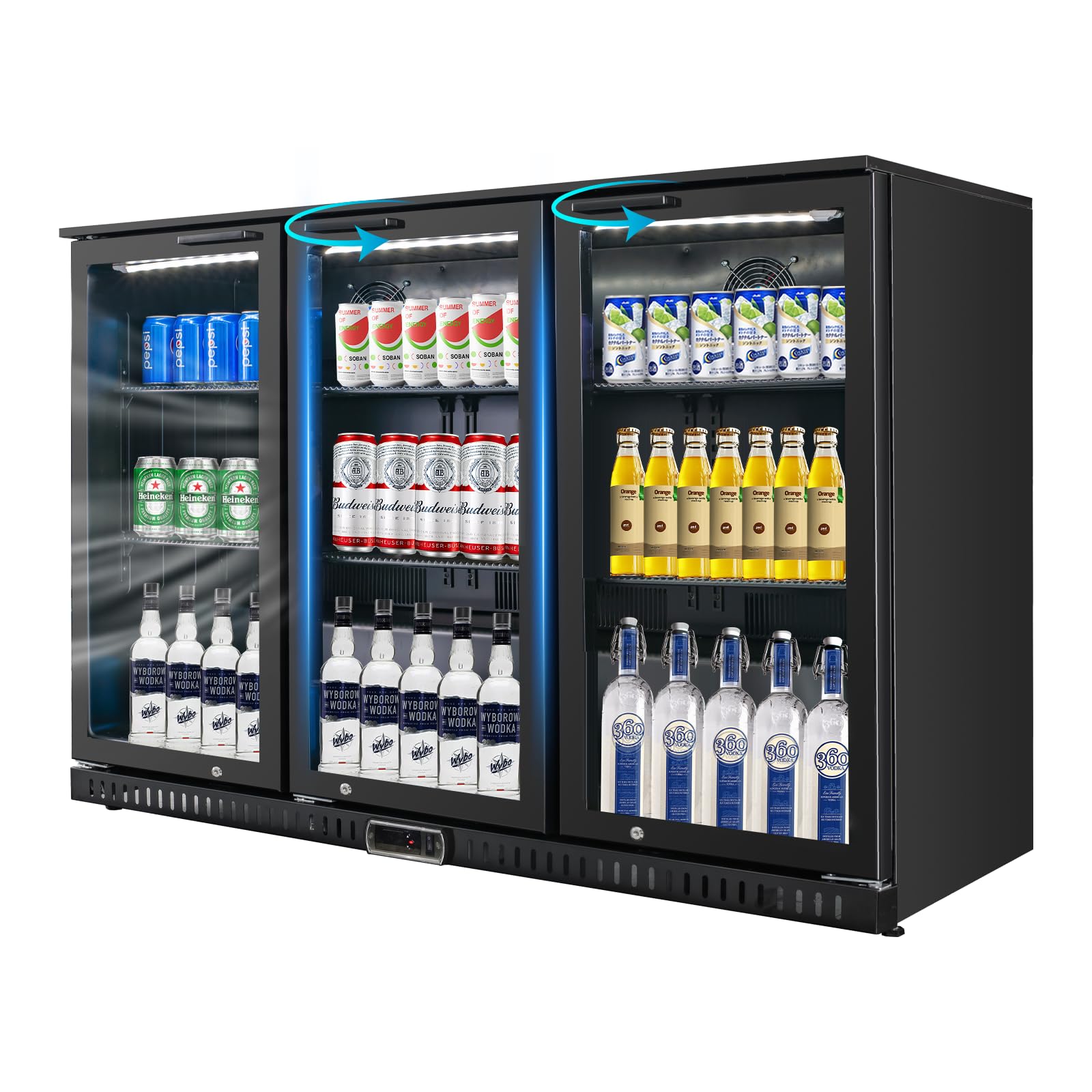
beverage-cooler · 11.5 cu ft
Professional Warranty & Reliable Support: We provide a three-year compressor warranty and a two-year parts warranty, ensuring peace of mind for your investment. This Commercial Back Bar Cooler is ETL-certified, guaranteeing safety and reliable performance in bars, restaurants, and other commercial environments. Our dedicated customer service team is available to assist with any questions, ensuring your experience is smooth and worry-free
Mini fridge dimensions: don't forget the exterior footprint
Cubic feet tells you what fits inside; it says nothing about whether the fridge fits where you want it. Before you buy, measure the opening — width, depth, and height — and add clearance. Most manufacturers require a few inches of breathing room around the compressor and behind the unit for ventilation, and any door that opens toward a wall needs swing space (many mini fridges have a reversible hinge to help here). A fridge that is the right volume but the wrong footprint is still the wrong fridge.
Frequently asked questions
What is a good size for a dorm mini fridge?
For a single dorm resident, 1.6 to 2.6 cubic feet is usually enough for drinks, snacks, and a few leftovers. Shared rooms are better served by a 3.1 to 3.5 cubic foot model, which is the top of the single-door "mini" size class. Always check your dorm rules, since many schools cap capacity around 4.0–4.3 cubic feet and cap amperage.
How many cans fit in a 3.2 cubic foot mini fridge?
Capacity in cans depends on shelf layout, but a 3.2 cubic foot fridge with an internal freezer compartment typically holds far more than a can-rated cooler — think a mix of a week of drinks plus condiments, a few takeout containers, and door-shelf bottles. Manufacturers usually publish can counts only for small can-cooler style units; for cubic-foot fridges, judge by the shelf and door-bin layout instead.
Is 1.6 cubic feet too small for a mini fridge?
It depends on the job. At about 1.6 cubic feet a fridge fits on a desk or counter and holds a weekend of drinks and snacks, but it fills up fast with anything beyond that, and its half-width freezer shelf is really only good for ice. If you regularly store more than a shelf of groceries, step up to roughly 3.1–3.5 cubic feet.
What cubic-foot size do I need for a home bar?
Home bars and beverage stations are usually happiest around 4.5 cubic feet and up, where glass-door merchandisers and beverage centers live. If you are chilling bottles and cans for guests, a larger built-in or freestanding beverage unit (roughly 5 to 11+ cubic feet) gives you organized, front-loading storage that a single-door mini fridge cannot match.
We may earn a commission when you buy through our links, at no extra cost to you. MiniFridge.com does not publish prices, star ratings, or review counts; specifications are drawn from manufacturer and retailer listings and cited as such.